Category: West Virginia Court System

  • West Virginia Magistrate Court Explained: Small Claims, Misdemeanors & Your Rights

    Magistrate Court is the entry point to the legal system for most West Virginians. In 2024 alone, it handled tens of thousands of civil cases and over 100,000 misdemeanor charges—making it the busiest court in the state.

    Understanding how Magistrate Court works can help you avoid mistakes, prepare for hearings, and make better decisions if you’re involved in a case.

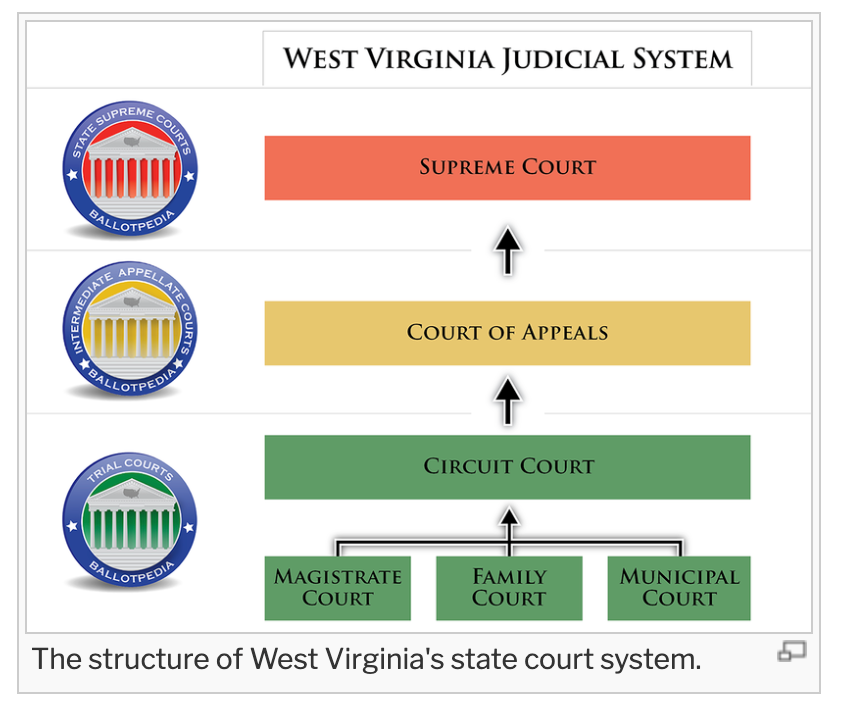
    See our full guide to the West Virginia Court System to understand how Magistrate, Family, and Circuit Courts work together.

    What Is Magistrate Court (Simple Definition)

    Magistrate Court is the front line of the West Virginia legal system. It handles everyday legal matters like small claims, landlord-tenant disputes, misdemeanor charges, and initial hearings in criminal cases. Because it is designed to be more accessible and less formal than higher courts, many cases start—and often end—at this level.

    2024 Magistrate Court by the Numbers

    Magistrate Court handles a massive volume of cases each year. Here’s what that looks like in practice:

    Metric 2024 Data
    Felony filings (preliminary hearings) 13,236
    Misdemeanor filings 110,875
    Small claims filings 30,060
    Emergency protective orders issued 9,769
    Personal safety petitions 4,670
    Mental health special proceedings 525

    Civil Cases: What Magistrate Court Can Handle

    Small Claims Court (Up to $10,000)

    Small claims court is designed so ordinary people — with or without a lawyer — can resolve money disputes quickly. Common cases include:

    • Security deposit disputes with landlords
    • Unpaid loans between individuals
    • Property damage claims
    • Unpaid work or contract disputes

    Filing fees vary by county but are typically $30–$75. If you win, you can ask the judge to add the filing fee to what the other party owes you.

    Landlord-Tenant (Unlawful Detainer & Eviction)

    If a landlord wants to evict a tenant, they must file an unlawful detainer action in magistrate court. Tenants have the right to appear and tell their side. A magistrate cannot evict a tenant who has not been given proper legal notice.

    Personal Safety Petitions

    If you are being stalked or harassed by someone who is not a family member or intimate partner, you can file a personal safety petition in magistrate court. In 2024, there were 4,670 such petitions filed statewide.

    Criminal Cases: What Magistrate Court Handles

    Misdemeanor Trials

    Magistrates can try and sentence misdemeanor cases. Common misdemeanors include simple assault, first-offense DUI, shoplifting, and traffic offenses.

    ⚖ Your Rights: You have the right to a jury trial in magistrate court for misdemeanors. You have the right to an attorney. If you cannot afford one and face possible jail time, the court must appoint a public defender. If convicted, you can appeal to circuit court for a brand-new trial (a “de novo” appeal) within 20 days.

    Felony Preliminary Examinations

    Magistrates do not try felony cases — that is circuit court’s job. But when someone is arrested on a felony charge, a magistrate holds a “preliminary examination” to decide whether there is enough evidence to send the case to circuit court. In 2024, there were 13,236 felony filings processed through magistrate courts statewide.

    Bail: How It Works

    After arrest, a magistrate sets bail — the amount of money required for release before trial. Factors considered include the seriousness of the charges, prior criminal history, flight risk, and danger to the community.

    ⚠ Bail Too High? If you believe bail was set unreasonably high, an attorney can request a bail reduction hearing in circuit court. This should be done as quickly as possible after arrest — every day in pretrial custody has real consequences.

    Mental Health and Special Proceedings

    In counties without enough mental hygiene commissioners, magistrates can handle probable cause hearings for involuntary hospitalization. They also handle emergency custody in child abuse and neglect cases. In 2024, magistrate courts processed 2,961 juvenile special proceedings and 525 mental health special proceedings.

    What Happens in Magistrate Court (Step-by-Step)

    If you have a case in Magistrate Court, the process is usually faster and less formal than higher courts—but it still follows a clear structure. Knowing what to expect can help you stay focused and avoid costly mistakes.

    1. The Case Is Called

    When your case is scheduled, the magistrate will call your name (and the other party’s name). Both sides come forward or confirm they are present.

    👉 If you don’t show up, the court may:

    • dismiss your case (if you filed it), or
    • enter a default judgment against you

    2. The Magistrate Explains the Process

    Magistrate courts are designed to be accessible, so the judge may briefly explain how the hearing will work—especially if one or both parties do not have a lawyer.

    This may include:

    • who speaks first
    • how evidence is presented
    • what the magistrate needs to decide

    3. The Plaintiff Presents Their Case

    The person who filed the case (the plaintiff) goes first.

    They will:

    • explain what happened
    • present documents (contracts, receipts, photos, messages)
    • call any witnesses

    👉 Tip: Keep it simple and stick to facts. Magistrates are listening for clear, relevant information.


    4. The Defendant Responds

    The other side (the defendant) then has a chance to respond.

    They may:

    • dispute the claim
    • present their own evidence
    • bring witnesses

    👉 Even if you disagree strongly, stay calm and focused—credibility matters.


    5. Questions and Clarifications

    The magistrate may ask questions at any point to better understand the facts.

    This can include:

    • clarifying timelines
    • asking about documents
    • resolving conflicting statements

    6. The Magistrate Makes a Decision

    In some cases, the magistrate will issue a decision immediately after hearing both sides.

    In others, the decision may come:

    • later that day
    • by mail

    The decision (called a judgment) will state:

    • who won
    • how much money is owed (if any)
    • any additional orders

    7. What Happens Next

    After the decision:

    • If you win, you may still need to collect the money—the court does not do this for you automatically. Learn how to collect a judgment in West Virginia.
    • If you lose, you may have the right to appeal to Circuit Court within a limited time.

    👉 Important: Magistrate Court is often just the beginning. What you do after the hearing can matter as much as what happens in court.

    ⚖️ What Happens After a Magistrate Court Decision

    Once the magistrate issues a decision, your case isn’t always “over.” What happens next depends on whether you win or lose—and what the other side does.


    If You Win the Case

    Winning in Magistrate Court means the judge agrees with you. But it does not automatically mean you’ll get paid.

    If the judgment involves money, the other party may:

    • pay voluntarily (best-case scenario)
    • delay payment
    • refuse to pay altogether

    If they don’t pay, you may need to take additional steps to collect, such as:

    • requesting a wage garnishment
    • placing a lien on property
    • pursuing other collection methods allowed under West Virginia law

    👉 Important: The court does not collect the money for you—you have to enforce the judgment.


    If You Lose the Case

    If the magistrate rules against you, you may have options—but they are time-sensitive.

    In West Virginia, you generally have the right to:

    👉 Key points:

    • You typically have 20 days to file an appeal
    • The case starts fresh in Circuit Court
    • Rules and procedures become more formal

    Missing the deadline usually means the decision becomes final.


    If the Other Side Appeals

    Even if you win, the other party can appeal the decision.

    If that happens:

    • the case moves to Circuit Court
    • the process becomes more formal
    • you may want to strongly consider legal representation

    When the Judgment Becomes Final

    If no one appeals within the allowed time:

    • the judgment becomes final
    • enforcement (if needed) can begin

    At this point, your focus shifts from:
    👉 “Who won?”
    to
    👉 “How do I actually resolve this?”


    Why This Stage Matters

    Many people assume the hardest part is the court hearing.

    In reality:

    • collecting money
    • responding to appeals
    • meeting deadlines

    can have just as much impact on the outcome.

    Understanding what comes next helps you:

    • avoid missed deadlines
    • protect your rights
    • make better decisions after court

    Magistrate Court is where many legal issues begin—but understanding what happens next is what ultimately determines the outcome.

    Frequently Asked Questions

    Do you need a lawyer in Magistrate Court?
    Not always, but having one can help you avoid procedural mistakes and better present your case.


    Related Posts

    Need Legal Help?
    Find your county magistrate court at courtswv.gov
    WV Legal Aid: lawv.net | 1-866-255-4370
    This post is for general information only and is not legal advice.
  • West Virginia Divorce, Custody & Child Support: A Complete Family Court Guide

    West Virginia family courts handle an enormous volume of cases. In 2024, there were 18,079 new family court cases filed statewide — covering divorce, custody, domestic violence, and support. If you are facing any of these issues, understanding how the system works is the first step.

    What Does Family Court Handle?

    West Virginia’s 47 family court judges have jurisdiction over:

    • Divorce and legal separation
    • Child custody and parenting plans
    • Child support and spousal support (alimony)
    • Paternity
    • Grandparent visitation
    • Name changes
    • Infant guardianship (when neither parent is available)
    • Final hearings in civil domestic violence cases

    2024 Family Court by the Numbers

    Metric 2024 Data
    New Family Court Cases Filed 18,079
    Divorce Filings 7,266
    Domestic Violence Filings 8,606
    Modification Proceedings 3,012
    Family Court Judges in WV 47

    Divorce: The Basics

    Grounds for Divorce in West Virginia

    West Virginia is a “no-fault” divorce state. You do not have to prove your spouse did anything wrong. The most common ground is “irreconcilable differences.” Fault-based grounds (like adultery or abuse) also exist but are less commonly used.

    Residency Requirement

    At least one spouse must have lived in West Virginia for at least one year before filing — OR the grounds for the divorce occurred in West Virginia.

    How Long Does Divorce Take?

    Type of Divorce What It Means Estimated Timeline
    Uncontested Both spouses agree on all issues (property, custody, support) As little as 60 days
    Contested Spouses disagree on one or more issues — a judge decides 6 months to 2+ years

    Child Custody: How West Virginia Courts Decide

    Judges make custody decisions based on the “best interests of the child.” There is no automatic preference for either parent. The court considers:

    • Each parent’s relationship with and involvement in the child’s life
    • Each parent’s ability to provide a stable, loving home
    • The child’s adjustment to home, school, and community
    • Each parent’s willingness to support the child’s relationship with the other parent
    • Any history of domestic violence, substance abuse, or criminal activity

    ℹ Two Types of Custody: Legal custody = who makes major decisions (medical, education, religion). Physical custody = where the child lives. Both can be shared (joint) or primarily with one parent (primary).

    Child Support: How It Is Calculated

    West Virginia uses an “income shares model.” Both parents’ incomes are added together, and each contributes proportionally. The formula also accounts for:

    • Number of children
    • Health insurance costs
    • Child care costs
    • The number of overnights each parent has per year

    Online tool: Use the West Virginia Child Support Calculator at dhhr.wv.gov/bcf/childsupport to estimate your support obligation before going to court.

    Can I Modify an Existing Order?

    Yes — but you must show a “substantial change in circumstances” since the last order was entered. Common reasons courts approve modifications include:

    • A significant change in either parent’s income
    • A parent relocating to another city or state
    • A major change in the child’s needs (health, schooling, safety)
    • A parent’s new relationship or household situation that affects the child

    In 2024, West Virginia family courts processed 3,012 modification proceedings and 2,345 contempt proceedings. If the other parent is not following the current order, a contempt filing may be your most immediate option.


    Related Posts

    Need Legal Help?
    WV Legal Aid offers free help with family law matters for income-qualifying West Virginians.
    lawv.net | 1-866-255-4370
    This post is for general information only and is not legal advice.

  • What The New West Virginia Child Care Law HB 4191 Actually Means for You

    West Virginia just passed a major child care law—and if you’re a parent, this could directly impact your daily life.

    Let’s break HB 4191 down simply.


    1. You Might See More Child Care Options Through Employers

    The state is giving businesses big tax breaks to help provide child care.

    That means:

    • More employers may offer on-site child care
    • Or help pay for care through partnerships

    👉 Why it matters:
    This could make child care easier to access and more affordable—especially for working parents.


    2. There Are New Rules for Using Child Care Subsidies

    If you receive financial help for child care:

    • Your child must attend at least ~8 days per month on average

    👉 Why it matters:
    If your schedule is inconsistent, you could lose eligibility.

    This is something families need to plan around.


    3. The “Benefits Cliff” Might Finally Be Fixed

    Before this law:

    • If you earned slightly more money, you could lose all your child care help overnight

    Now:

    • The state plans to phase out benefits gradually instead of cutting them off

    👉 Why it matters:
    You may be able to:

    • Take a raise
    • Work more hours
    • Advance your career

    …without immediately losing support.


    4. What’s Still Unknown

    Some parts of the law are not fully set yet.

    The state still needs to:

    • Write detailed rules
    • Decide how phase-outs actually work
    • Implement changes by 2027

    👉 Translation:
    Things could change again as the details are finalized.


    Bottom Line (Citizen POV)

    This law is trying to fix a real problem:

    • Child care is expensive
    • It limits people’s ability to work

    The goal is to:

    • Make care more available
    • Support working families
    • Remove barriers to earning more income

    But you’ll want to stay informed—because how the rules are implemented will matter just as much as the law itself.


  • 3 Things You Need to Know About West Virginia’s New Child Care Law

    West Virginia just passed what lawmakers are calling “hallmark” child care legislation—but it became law without the governor’s signature, adding an unusual political twist.

    Here are the three key things you need to understand:


    1. It Became Law Without the Governor’s Signature

    The bill became law without approval from Governor Patrick Morrisey.

    That matters because:

    • It signals political tension around the bill
    • The governor chose not to veto it—but also didn’t endorse it
    • This “passive enactment” is relatively rare and often strategic

    👉 Translation: the policy is moving forward, but not with unified leadership support.


    2. Lawmakers See It as a Major Child Care Reform

    This bill is being framed as a “hallmark” piece of legislation, meaning it’s intended to be a cornerstone policy for:

    • Expanding access to child care
    • Supporting working families
    • Addressing workforce participation challenges

    This is especially important in states like West Virginia, where:

    • Child care access directly impacts employment
    • Rural areas face limited provider availability
    • Economic growth is tied to family support systems

    👉 In short: this isn’t a minor tweak—it’s meant to reshape the system.


    3. It Reflects a Bigger Economic Strategy

    Child care policy is no longer just a social issue—it’s economic infrastructure.

    Zooming out, this law connects to:

    • Workforce participation rates
    • Cost-of-living pressures
    • Long-term population stability

    And the data shows why this matters:

    • West Virginia courts handled over 9,000 juvenile cases in 2024, many tied to family stability issues
    • Family courts handled 18,000+ cases annually, reflecting ongoing family system strain

    👉 Policies like this are part of a broader attempt to stabilize families—and by extension, the economy.


    Bottom Line

    This law is important not just because of what it does—but how it passed:

    • ✔️ Major reform effort
    • ✔️ Politically complicated rollout
    • ✔️ Direct impact on workforce and families

    If it works, it could become a model for other states.
    If it struggles, it highlights just how hard child care reform actually is.