Court records are official documents created during legal cases. These records can include filings, hearing schedules, rulings, and other information about how a case moves through the court system.
In West Virginia, many court records are available to the public, although some types of cases or documents may be restricted for privacy or legal reasons.
Understanding how court records work can help people track cases, learn about court procedures, or verify legal information.
Why Court Records Matter
Court records serve several important purposes.
They allow the public to:
-
follow the progress of a legal case
-
verify court decisions and rulings
-
understand how legal disputes are resolved
-
research past cases
Access to court records is part of the broader principle of transparency in the legal system.
However, access may vary depending on the type of case and the court involved.
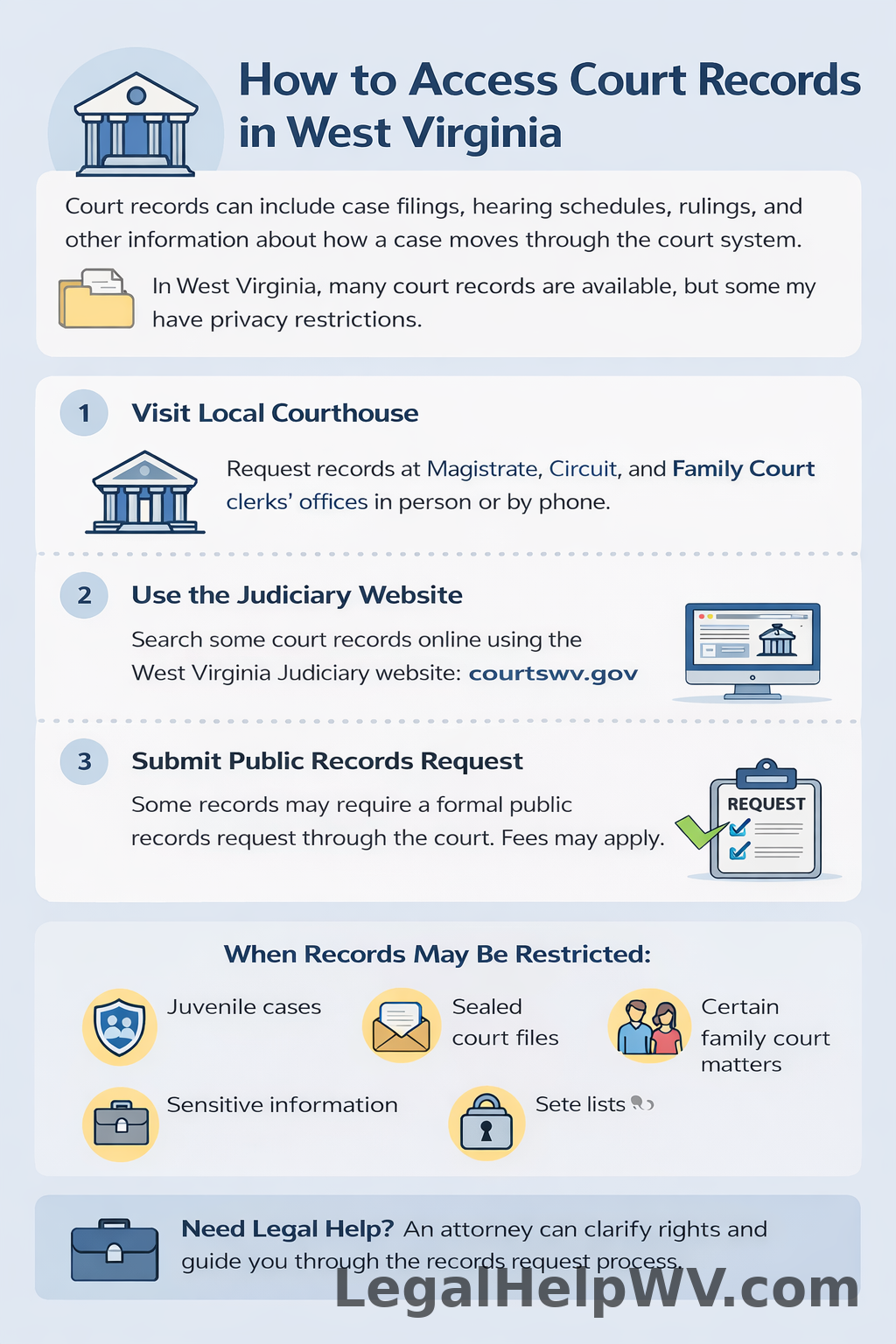
Where to Find West Virginia Court Records
There are several ways to access court records in West Virginia.
1. Local Courthouse Clerk Offices
Many court records are maintained by the clerk of the court where the case was filed.
Examples include:
-
Magistrate Court clerks
-
Circuit Court clerks
-
Family Court clerks
Individuals can often request records by visiting the courthouse or contacting the clerk’s office.
Some courts may charge small copying or administrative fees.
2. West Virginia Judiciary Website
The West Virginia Judiciary provides online information about the state court system, including case information for some courts.
The official site is:
Depending on the case, you may be able to find:
-
docket information
-
hearing dates
-
case status
Not all records are available online.
3. Public Records Requests
In some situations, court documents may be obtained through formal records requests.
These requests may involve submitting paperwork or paying processing fees.
The availability of records depends on legal rules governing public access.
Types of Court Records That May Be Available
Examples of records that may be accessible include:
-
case filings
-
court orders
-
hearing schedules
-
judgments
-
docket entries
However, some records may be restricted.
For example:
-
juvenile cases
-
certain family court matters
-
sealed records
Courts may limit access to protect privacy or comply with legal requirements.
When Court Records May Be Restricted
Not every document in a case is automatically public.
Records may be restricted when they involve:
-
minors
-
sensitive personal information
-
sealed court proceedings
-
certain domestic relations matters
The court determines what records can be publicly released.
When to Consider Legal Advice
If you are trying to access court records related to a legal dispute or ongoing case, consulting a lawyer may help clarify your options.
Legal professionals can explain:
-
what records are available
-
how to request them
-
how court procedures affect access to documents
Final Thoughts
Court records play an important role in helping the public understand how the legal system works.
While many records in West Virginia courts are publicly accessible, the process for obtaining them may vary depending on the court and the type of case involved.
If you need specific records, contacting the relevant courthouse clerk is often the best place to start.
Court records are official documents that courts create during legal cases. These records often include filings, hearing schedules, rulings, and other information that shows how a case moves through the court system.
In West Virginia, many court records are available to the public. However, courts may restrict certain cases or documents to protect privacy or comply with legal rules.
Because of this, understanding how court records work helps people track cases, learn about court procedures, and verify legal information.
Why Court Records Matter
Court records serve several important purposes. First, they allow the public to see how courts resolve disputes. In addition, they help people understand how the legal system operates.
For example, court records can help individuals:
-
follow the progress of a legal case
-
verify court decisions and rulings
-
understand how courts resolve legal disputes
-
research past cases
Therefore, public access to court records supports transparency in the legal system.
However, access sometimes varies depending on the type of case and the court involved.
Where to Find West Virginia Court Records
Fortunately, people can access court records in several ways in West Virginia.
1. Local Courthouse Clerk Offices
First, many records are available through the clerk of the court where the case was filed.
For example, you may contact:
-
Magistrate Court clerks
-
Circuit Court clerks
-
Family Court clerks
In many situations, individuals can request records by visiting the courthouse or contacting the clerk’s office directly. However, some courts may charge small copying or administrative fees.
2. West Virginia Judiciary Website
In addition to courthouse offices, the West Virginia Judiciary website provides information about the state court system.
You can visit the official website here:
Depending on the court and the case, the site may provide:
-
docket information
-
hearing dates
-
case status updates
However, not every record appears online. Therefore, you may still need to contact the courthouse for certain documents.
3. Public Records Requests
In some situations, individuals may request court documents through formal public records requests.
Typically, this process requires submitting paperwork or paying processing fees. In addition, the court must review the request to ensure the documents qualify for public release.
As a result, the availability of records depends on legal rules that govern public access.
Types of Court Records That May Be Available
Many types of documents may appear in court records. For example, individuals may find:
-
case filings
-
court orders
-
hearing schedules
-
judgments
-
docket entries
These documents help explain what happened in a case and how the court resolved it.
However, courts may restrict some records.
For instance, courts often limit access to:
-
juvenile cases
-
certain family court matters
-
sealed records
Because of privacy and legal protections, courts carefully control access to these materials.
When Court Records May Be Restricted
Not every document in a legal case becomes public.
For example, courts may restrict records that involve:
-
minors
-
sensitive personal information
-
sealed court proceedings
-
certain domestic relations matters
Therefore, the court decides which records the public may access and which records must remain confidential.
When to Consider Legal Advice
Sometimes people search for court records while dealing with a legal dispute or an ongoing case. In these situations, speaking with a lawyer may help clarify your options.
For example, legal professionals can explain:
-
what records are available
-
how to request them
-
how court procedures affect access to documents
As a result, legal guidance may help you navigate the process more effectively.
Final Thoughts
Court records play an important role in helping the public understand how the legal system works.
While many West Virginia court records remain publicly accessible, the process for obtaining them can vary depending on the court and the type of case.
Therefore, if you need specific documents, contacting the appropriate courthouse clerk often provides the best starting point.
Leave a Reply