Category: DUI

Plain-English guides and explanations about DUI charges in West Virginia, including arrests, penalties, license suspension, court procedures, and DUI-related statistics.

  • DUI Laws in West Virginia: Complete Guide (2026)

    If you are arrested for DUI in West Virginia, the consequences can affect your license, criminal record, employment, insurance costs, and even your freedom. Many people are surprised to learn that a DUI case can involve both criminal court proceedings and separate license-related consequences through the Division of Motor Vehicles (DMV).

    This guide explains how DUI laws work in West Virginia, what penalties may apply, what happens after an arrest, and what options may exist depending on the circumstances of the case.

    What Counts as DUI in West Virginia?

    Under West Virginia law, a person may be charged with DUI if they operate a vehicle while in an “impaired state.”

    That can include:

    • Alcohol impairment
    • Controlled substances
    • Prescription drugs
    • Illegal drugs
    • A combination of alcohol and drugs

    West Virginia law also allows DUI charges based on blood alcohol concentration (BAC). In most adult cases, a BAC of 0.08% or higher may support a DUI charge.

    A person does not need to appear heavily intoxicated to be charged.


    What Is the Legal BAC Limit in West Virginia?

    Adult Drivers (21+)

    • 0.08% BAC

    Commercial Drivers (CDL)

    • Lower standards may apply under federal and state commercial driving rules.

    Drivers Under 21

    West Virginia has a lower threshold for underage drivers. A BAC of 0.02% or higher may lead to penalties for drivers under 21.


    DUI Penalties in West Virginia

    Penalties depend on factors such as:

    • Prior DUI history
    • BAC level
    • Whether injuries occurred
    • Whether a child was in the vehicle
    • Whether the driver refused testing
    • Whether the case involves drugs instead of alcohol

    West Virginia DUI penalties can include:

    • Jail time
    • Fines
    • License suspension or revocation
    • Ignition interlock requirements
    • Mandatory treatment programs
    • Probation
    • Permanent criminal records

    First-Offense DUI in West Virginia

    A first DUI offense is typically charged as a misdemeanor.

    Possible penalties may include:

    • Up to 6 months in jail
    • Fines
    • License revocation
    • Participation in the ignition interlock program
    • Safety and treatment requirements

    If the BAC is 0.15% or higher, penalties can increase.

    Some first-time offenders may qualify for a deferral program tied to the Motor Vehicle Alcohol Test and Lock Program.

    That process can be extremely technical and has strict eligibility requirements.


    Second and Third DUI Offenses

    Repeat DUI offenses carry significantly harsher penalties.

    Second DUI

    A second DUI offense can lead to:

    • Mandatory jail time
    • Larger fines
    • Long-term license revocation
    • Ignition interlock requirements

    Third DUI

    A third DUI offense may be charged as a felony.

    Penalties can include:

    • State prison time
    • Lifetime license revocation
    • Felony criminal record

    DUI Causing Injury or Death

    West Virginia law creates separate felony offenses when impaired driving causes harm to another person.

    DUI Causing Bodily Injury

    Possible penalties include:

    • Jail time
    • Fines
    • Multi-year license revocation

    DUI Causing Serious Bodily Injury

    This offense may carry:

    • 2 to 10 years in prison
    • Significant fines
    • Long-term license consequences

    DUI Causing Death

    A driver accused of causing a death while impaired may face felony charges carrying years in prison.

    West Virginia also recently passed “Baylea’s Law,” which increased penalties and limited home confinement options in certain fatal DUI cases.


    Refusing a DUI Test in West Virginia

    West Virginia has implied consent laws.

    That means drivers can face consequences for refusing a secondary chemical test after a lawful DUI arrest.

    Possible consequences may include:

    • License revocation
    • Ignition interlock requirements
    • Separate refusal proceedings

    These issues can become complicated quickly because refusal cases often involve strict deadlines and technical procedural rules.

    👉 Related: Refusing a DUI Test in West Virginia


    What Happens After a DUI Arrest?

    Many DUI cases begin in Magistrate Court.

    Typical steps may include:

    1. Arrest
    2. Booking
    3. Bond or bail determination
    4. Initial appearance
    5. Criminal charges filed
    6. DMV consequences
    7. Plea negotiations or hearings
    8. Trial or resolution

    Some DUI cases stay in Magistrate Court, while felony-related DUI cases may move to Circuit Court.

    According to the West Virginia court system, Magistrate Courts handled more than 110,000 misdemeanor criminal filings statewide in 2024.


    License Suspension and Revocation

    A DUI can affect driving privileges even before the criminal case ends.

    Depending on the situation, consequences may include:

    • Administrative license suspension
    • Revocation
    • Ignition interlock participation
    • Treatment requirements
    • Restricted driving privileges

    The DMV process can operate separately from the criminal case.


    Ignition Interlock Program

    West Virginia allows some drivers to participate in the Motor Vehicle Alcohol Test and Lock Program.

    An ignition interlock device generally requires the driver to provide a breath sample before the vehicle will start.

    Participation may sometimes reduce suspension periods or help restore limited driving privileges.


    Underage DUI Laws in West Virginia

    Drivers under 21 face stricter alcohol rules.

    Even relatively low BAC levels can trigger:

    • License suspension
    • Fines
    • Court proceedings
    • Possible ignition interlock requirements

    A second underage DUI offense can carry significantly more severe consequences.


    DUI and Prescription Drugs

    A DUI charge does not require illegal drugs or alcohol.

    A person may still face DUI allegations involving:

    • Prescription medications
    • Sleep aids
    • Anxiety medication
    • Opioids
    • Combined medication and alcohol use

    The legal issue is impairment — not simply whether the substance was legally prescribed.


    Can a DUI Be Expunged in West Virginia?

    Some first-offense DUI cases may qualify for dismissal and possible expungement under limited circumstances tied to deferred adjudication programs.

    Eligibility depends on factors such as:

    • Prior criminal history
    • Successful completion of required programs
    • Compliance with court conditions
    • Type of DUI charge involved

    Not every DUI qualifies.


    Frequently Asked Questions

    Is a first DUI a felony in West Virginia?

    Usually no. Most first-offense DUIs are misdemeanors unless serious injury or death is involved.

    Can you refuse a breath test in West Virginia?

    You can refuse, but refusal may trigger separate license-related penalties and proceedings.

    Can you go to jail for a first DUI?

    Yes. Jail is possible even for some first-time offenses.

    What happens if your BAC is over 0.15?

    Higher BAC levels can increase penalties and mandatory consequences.

    Can a DUI affect your job?

    Potentially yes. A DUI may impact professional licenses, commercial driving privileges, insurance rates, and employment opportunities.


    Bottom Line

    A DUI charge in West Virginia can create immediate and long-term consequences involving criminal court, driving privileges, insurance costs, employment, and future legal exposure.

    Because DUI law involves strict procedures, technical evidence issues, and overlapping court and DMV processes, understanding the rules early can make a major difference.

  • What Happens If You Refuse a DUI Chemical Test in West Virginia?

    If you are arrested for DUI in West Virginia, refusing a secondary chemical test can create serious consequences even before the DUI case itself is resolved.

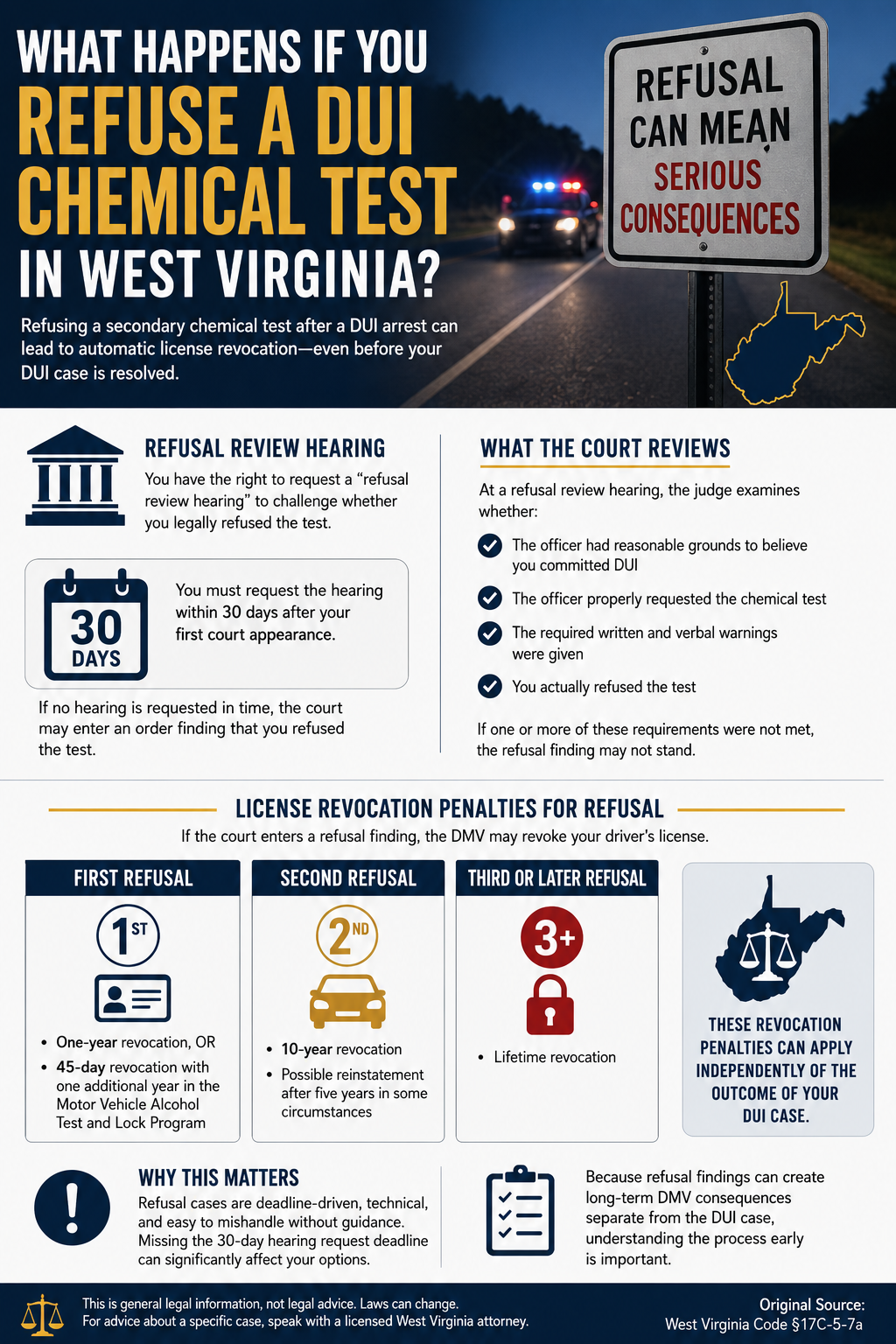
    Under West Virginia law, drivers accused of DUI may request a “refusal review hearing” to challenge whether they legally refused a secondary chemical test. But the deadline is strict: the request usually must be made within 30 days after the person’s first court appearance.

    If no hearing is requested in time, the court may enter an order finding that the person refused the test — triggering automatic license revocation consequences through the Division of Motor Vehicles.

    What Is a Refusal Review Hearing?

    A refusal review hearing is a court proceeding that reviews whether a person actually refused a secondary chemical test after a DUI arrest.

    The hearing focuses on the alleged refusal itself, not whether the person is ultimately guilty of DUI.

    Under West Virginia Code §17C-5-7a, a person must request the hearing within 30 days after the first court appearance. If the deadline passes without a request, the court may enter an order finding that the person refused the test.

    refusing chemical test WV

    What the Court Reviews

    At a refusal review hearing, the court does not simply decide whether someone said “no” to a chemical test. The judge reviews several legal and procedural issues.

    The court examines whether:

    • the officer had reasonable grounds to believe the person committed DUI,
    • the officer properly requested the chemical test,
    • the required written and verbal warnings were given, and
    • the driver actually refused the test.

    If the court determines one or more of those requirements were not met, the refusal finding may not stand.

    License Revocation Penalties for Refusal

    If the court enters a refusal finding, the DMV may revoke the driver’s license.

    First refusal

    • One-year revocation, OR
    • 45-day revocation with one additional year in the Motor Vehicle Alcohol Test and Lock Program

    Second refusal

    • 10-year revocation
    • Possible reinstatement after five years in some circumstances

    Third or later refusal

    • Lifetime revocation

    These revocation penalties can apply independently of the outcome of the DUI charge itself.

    Why This Matters

    Refusal cases are deadline-driven, technical, and easy to mishandle without guidance. Missing the 30-day hearing request deadline can significantly affect a driver’s options.

    Because refusal findings can create long-term DMV consequences separate from the DUI case, understanding the process early is important.

    This article is general legal information, not legal advice. Laws can change. For advice about a specific DUI or refusal case, speak with a licensed West Virginia attorney.

  • What Is Baylea’s Law? New DUI Penalties in West Virginia Explained

    What Is Baylea’s Law? New DUI Penalties in West Virginia Explained

    West Virginia has passed a new law called Baylea’s Law, which increases penalties for drivers who cause a death while under the influence of drugs or alcohol.

    (more…)