If you or someone you know has been arrested in West Virginia, the process can feel overwhelming and fast-moving. Within hours, you may be in front of a magistrate, facing decisions that can impact the entire outcome of your case.
This guide walks you through what happens after an arrest in West Virginia, from your first court appearance through trial, sentencing, and appeal.
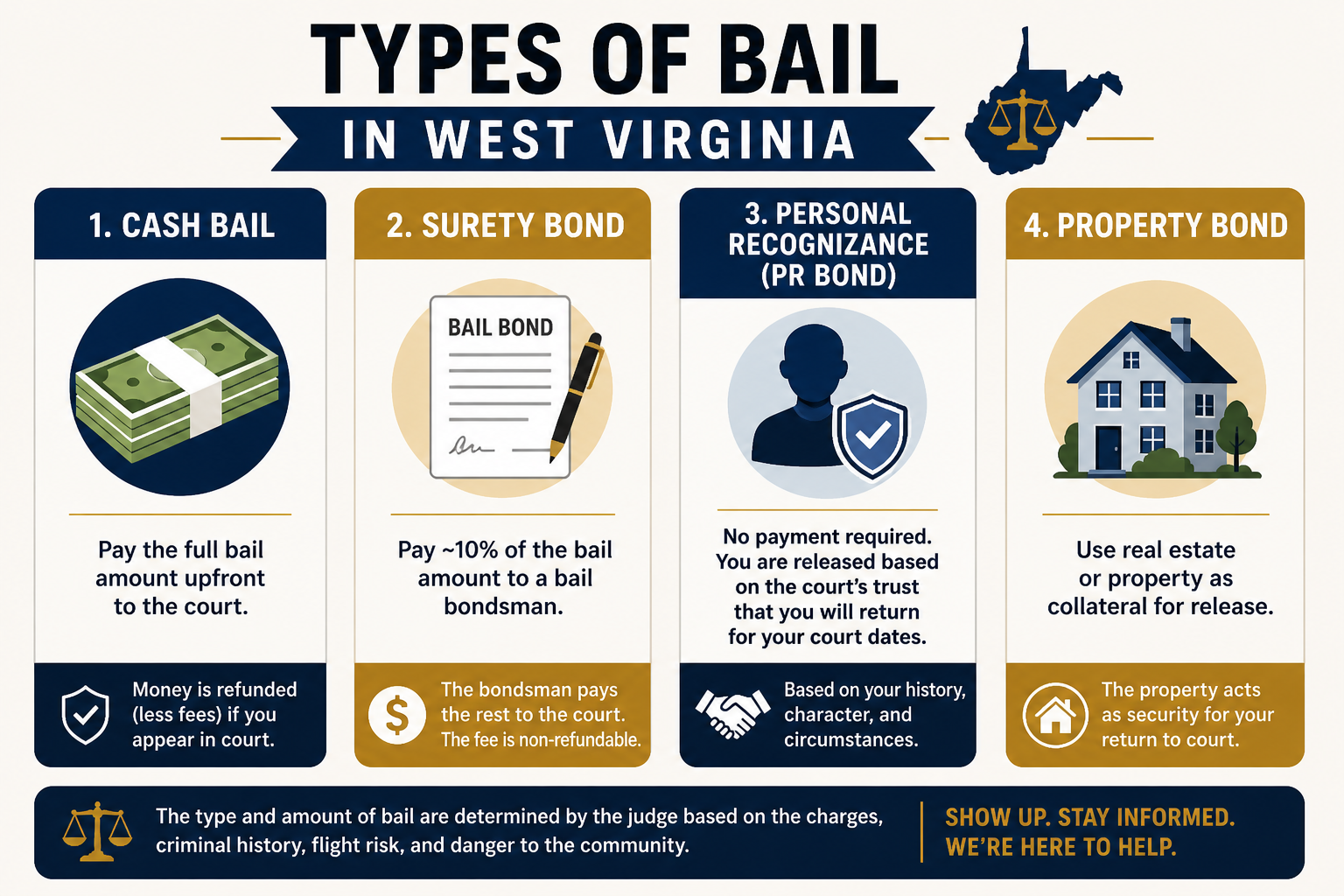
👉 If you’re trying to understand how to get released quickly, start here:
→ How Bail Works in West Virginia

🚨 Just Got Arrested in West Virginia? Do This First
If the arrest just happened:
- Do not answer questions beyond basic identification
- Ask for a lawyer immediately
- Find out the bail amount
- Contact a bondsman or attorney
- Show up to every court date
👉 Most mistakes happen in the first 24 hours.
Step 1: Arrest and Initial Appearance
After an arrest, you are taken before a magistrate—often within hours.
At this hearing, the magistrate will:
- Inform you of the charges
- Advise you of your right to an attorney
- Appoint a public defender if needed
- Set bail or conditions for release
👉 Bail is a critical part of this step.
→ Learn exactly how bail is set and how release works here: How Bail Works in West Virginia
⚖️ Your Right to an Attorney
You have the right to an attorney at every critical stage of your case.
If you cannot afford one, the court must appoint a public defender.
Say clearly:
“I am invoking my right to an attorney.”
Then stop answering questions.
Step 2: Misdemeanor vs. Felony — Two Different Paths
| Misdemeanor | Felony | |
|---|---|---|
| Court | Magistrate | Circuit Court |
| Max Sentence | Up to 1 year (jail) | 1+ years (prison) |
| Examples | DUI, shoplifting | robbery, drug trafficking |
| Appeals | De novo to circuit | WV Supreme Court |
Step 3: Preliminary Examination (Felony Cases)
A magistrate determines whether there is enough evidence (“probable cause”) to move the case forward.
You have the right to:
- an attorney
- cross-examine witnesses
- present evidence
If probable cause is not found, the charges are dismissed.
Step 4: Grand Jury Indictment
For most felonies, prosecutors present evidence to a grand jury.
- Proceedings are secret
- The jury decides whether to issue formal charges (indictment)
Step 5: Arraignment
At arraignment, the charges are formally read and you enter a plea:
- Not Guilty → case continues
- Guilty → moves to sentencing
- No Contest → treated like guilty
Step 6: Plea Bargaining
Most cases are resolved through plea agreements.
You may:
- Accept a reduced charge
- Receive a lighter sentence
👉 You are never required to accept a plea.
Step 7: Trial
If no agreement is reached:
- You have the right to a jury trial
- The jury must find guilt beyond a reasonable doubt
- You can:
- remain silent
- cross-examine witnesses
- present your own evidence
Step 8: Sentencing
If convicted, the judge determines the sentence.
Factors include:
- criminal history
- severity of offense
- victim impact
- pre-sentence report
Step 9: Appeals
You have the right to appeal to the West Virginia Supreme Court of Appeals.
Appeals review legal errors—not facts—and must be filed quickly.
🔄 What Happens After You’re Released?
Getting out of jail is just the beginning.
After release:
- You must attend all hearings
- You may have restrictions (travel, contact, etc.)
- Your attorney begins building your defense
👉 Missing court can result in a warrant.
❓ Frequently Asked Questions
How quickly do you see a judge in West Virginia?
Usually within hours of arrest.
Do all arrests lead to jail time?
No. Many people are released quickly depending on the charge.
What happens if you miss court?
A warrant may be issued and bail forfeited.
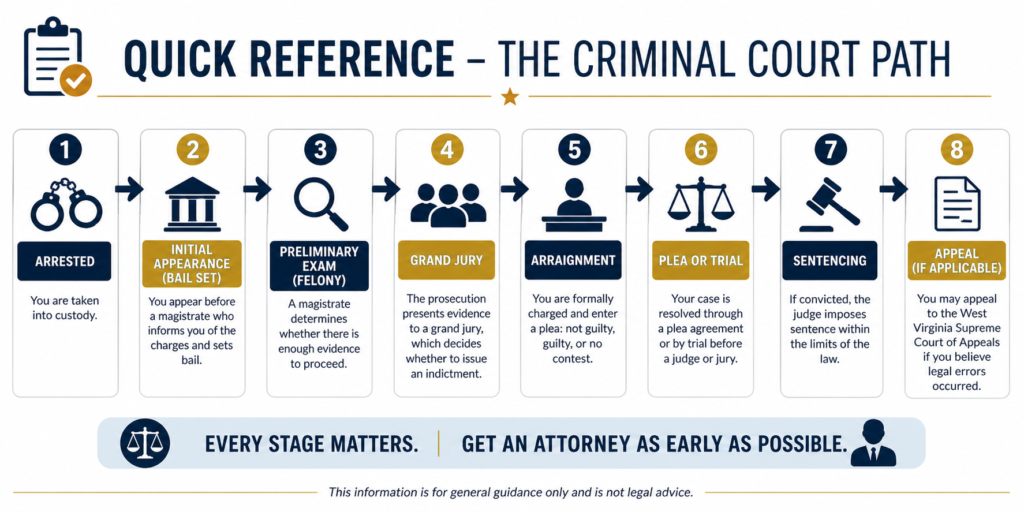
📋 Quick Reference — The Criminal Court Path
Arrested → Initial Appearance → Preliminary Exam → Grand Jury → Arraignment → Plea or Trial → Sentencing → Appeal
👉 Every stage matters. Get an attorney early.