If you are arrested for DUI in West Virginia, refusing a secondary chemical test can create serious consequences even before the DUI case itself is resolved.
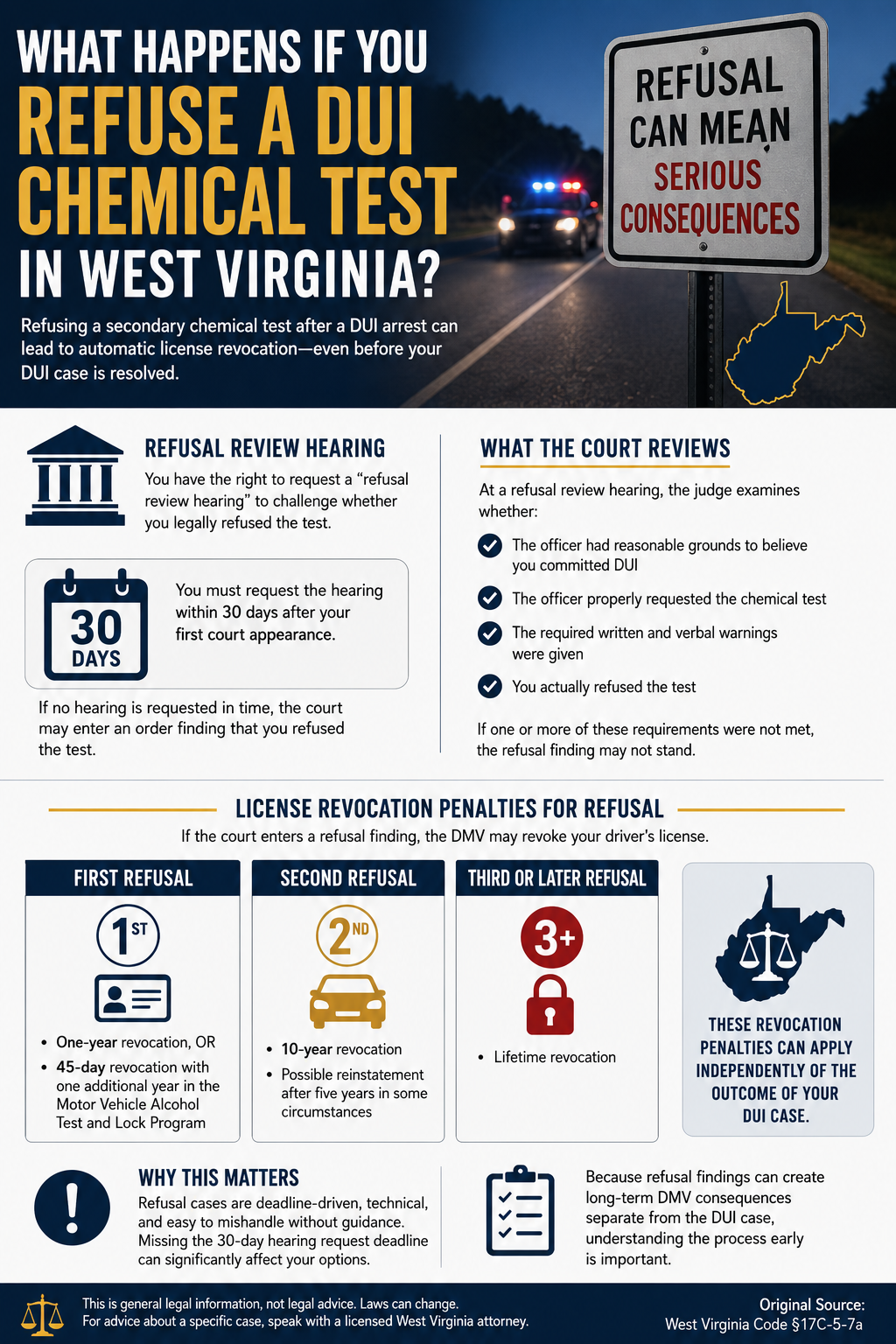
Under West Virginia law, drivers accused of DUI may request a “refusal review hearing” to challenge whether they legally refused a secondary chemical test. But the deadline is strict: the request usually must be made within 30 days after the person’s first court appearance.
If no hearing is requested in time, the court may enter an order finding that the person refused the test — triggering automatic license revocation consequences through the Division of Motor Vehicles.
Table of Contents
ToggleWhat Is a Refusal Review Hearing?
A refusal review hearing is a court proceeding that reviews whether a person actually refused a secondary chemical test after a DUI arrest.
The hearing focuses on the alleged refusal itself, not whether the person is ultimately guilty of DUI.
Under West Virginia Code §17C-5-7a, a person must request the hearing within 30 days after the first court appearance. If the deadline passes without a request, the court may enter an order finding that the person refused the test.
What the Court Reviews
At a refusal review hearing, the court does not simply decide whether someone said “no” to a chemical test. The judge reviews several legal and procedural issues.
The court examines whether:
- the officer had reasonable grounds to believe the person committed DUI,
- the officer properly requested the chemical test,
- the required written and verbal warnings were given, and
- the driver actually refused the test.
If the court determines one or more of those requirements were not met, the refusal finding may not stand.
License Revocation Penalties for Refusal
If the court enters a refusal finding, the DMV may revoke the driver’s license.
First refusal
- One-year revocation, OR
- 45-day revocation with one additional year in the Motor Vehicle Alcohol Test and Lock Program
Second refusal
- 10-year revocation
- Possible reinstatement after five years in some circumstances
Third or later refusal
- Lifetime revocation
These revocation penalties can apply independently of the outcome of the DUI charge itself.
Why This Matters
Refusal cases are deadline-driven, technical, and easy to mishandle without guidance. Missing the 30-day hearing request deadline can significantly affect a driver’s options.
Because refusal findings can create long-term DMV consequences separate from the DUI case, understanding the process early is important.
This article is general legal information, not legal advice. Laws can change. For advice about a specific DUI or refusal case, speak with a licensed West Virginia attorney.