It is common for a business owner to use more than one LLC. In many situations, that is ordinary business planning. Separate entities may be used to hold different assets, manage risk, or operate different lines of business.
But if you are trying to collect on a judgment, multiple LLCs can raise difficult questions. The issue is not simply whether there are several entities. The issue is whether the structure is being used legitimately or whether it is being used to keep assets away from creditors.
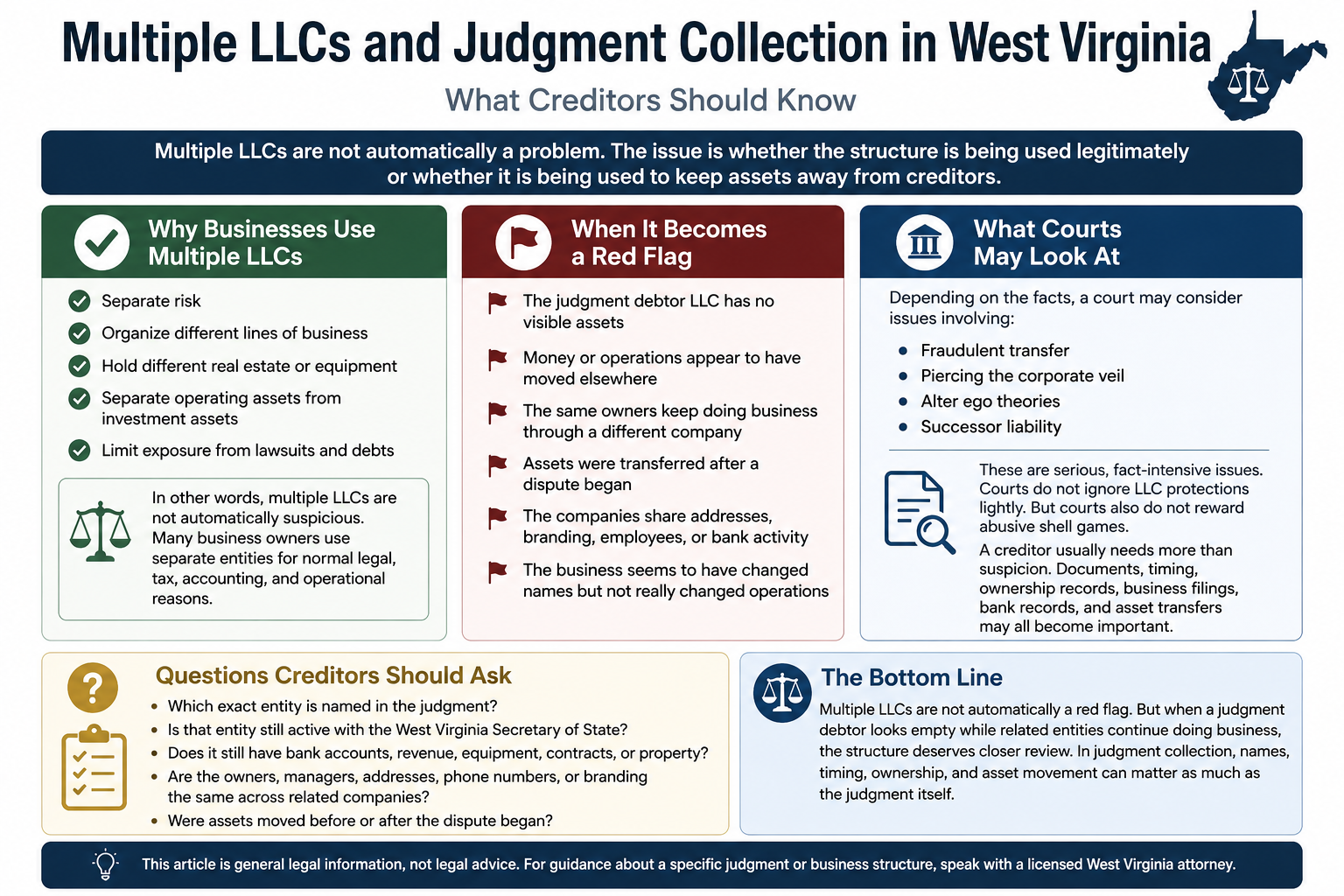
Why Businesses Use Multiple LLCs
Separate entities are often created to:
- separate risk
- organize different lines of business
- hold different real estate or equipment
- separate operating assets from investment assets, or
- limit exposure from lawsuits and debts
In other words, multiple LLCs are not automatically suspicious. Many business owners use separate entities for normal legal, tax, accounting, and operational reasons.
When It Becomes a Red Flag
The concern grows when the entity that lost the lawsuit appears empty while related entities continue operating. Red flags may include:
- the judgment debtor LLC has no visible assets,
- money or operations appear to have moved elsewhere,
- the same owners keep doing business through a different company,
- assets were transferred after a dispute began,
- the companies share addresses, branding, employees, or bank activity, or
- the business seems to have changed names but not really changed operations.
That is when people start wondering whether the structure was used to make the business judgment-proof.
What Courts May Look At
Depending on the facts, a court may consider issues involving fraudulent transfer, piercing the corporate veil, alter ego theories, or successor liability. These are serious, fact-intensive issues. Courts do not ignore LLC protections lightly. But courts also do not reward abusive shell games.
The details matter. A creditor usually needs more than suspicion. Documents, timing, ownership records, business filings, bank records, and asset transfers may all become important.
Questions Creditors Should Ask
If you are trying to understand whether multiple LLCs matter, start with practical questions:
- Which exact entity is named in the judgment?
- Is that entity still active with the West Virginia Secretary of State?
- Does it still have bank accounts, revenue, equipment, contracts, or property?
- Are the owners, managers, addresses, phone numbers, or branding the same across related companies?
- Were assets moved before or after the dispute began?
Those details may matter more than the number of LLCs alone.
Why This Matters in Collection
People often assume winning a lawsuit means the hard part is over. But sometimes the real problem begins after judgment, especially when the debtor operates through layered business entities.
That is one reason many people start with the broader question: Can someone avoid paying a judgment? You may also want to understand the difference between a judgment itself and a property claim by reading Judgment vs. Lien in West Virginia.
The Bottom Line
Multiple LLCs are not automatically a red flag. But when a judgment debtor looks empty while related entities continue doing business, the structure deserves closer review. In judgment collection, names, timing, ownership, and asset movement can matter as much as the judgment itself.
This article is general legal information, not legal advice. For guidance about a specific judgment or business structure, speak with a licensed West Virginia attorney.