If you’re starting a business in West Virginia, one of the most common—and confusing—questions is:
“Do I actually need a business license?”
The short answer is:
👉 Yes — most businesses need more than one.
There is no single, universal business license in West Virginia.
Instead, your requirements depend on:
- What your business does
- Where it operates
- Whether you sell goods or taxable services
- Whether your profession is regulated
👉 Important:
Forming an LLC or corporation does NOT mean you are licensed to operate.
That’s one of the most common (and costly) mistakes new business owners make.
What Counts as a “Business License” in West Virginia?
In West Virginia, “business license” is really an umbrella term that includes:
- State business registration (LLC, corporation, or DBA)
- Sales tax registration
- Local city or county business licenses
- Professional or occupational licenses
- Industry-specific permits (health, construction, etc.)
👉 Most businesses need a combination of these—not just one.
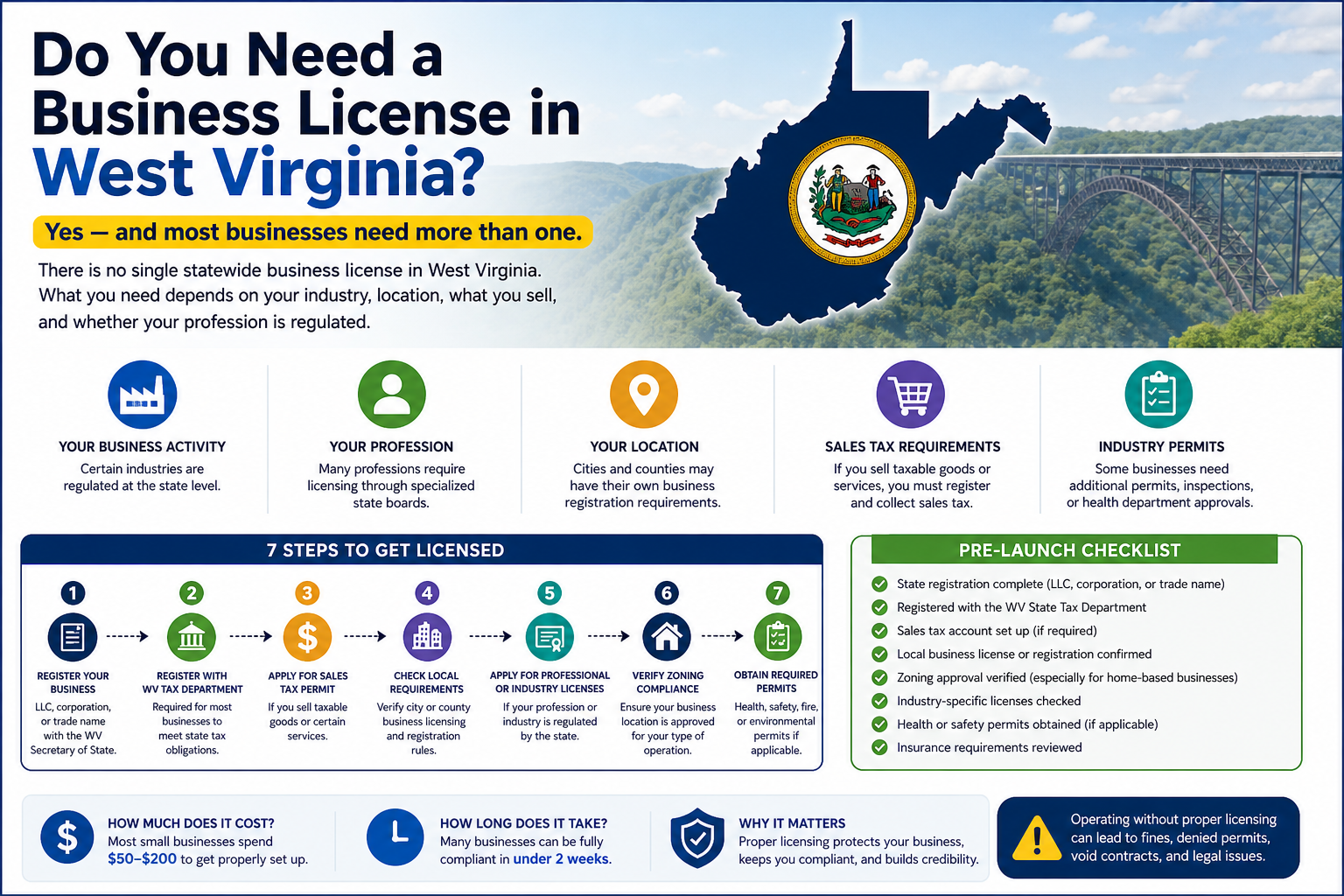
How to Get a Business License in West Virginia (Step-by-Step)
If you want to be fully compliant, here’s the process most businesses follow:
Step 1: Register Your Business
- Form an LLC, corporation, or register a trade name
- Filed through the West Virginia Secretary of State
👉 This creates your legal entity—but does NOT license your activity.
Step 2: Register with the WV State Tax Department
- Required for most businesses
- Needed to pay business taxes and hire employees
👉 This step connects your business to the state’s tax system.
Step 3: Apply for a Sales Tax Permit (if applicable)
If you sell:
- Physical goods
- Certain taxable services
You must:
- Register for a sales tax account
- Collect and remit sales tax
👉 This applies to both in-state and out-of-state sellers.
Step 4: Check Local City or County Requirements
Many cities require their own registration.
Common examples include:
- Charleston
- Huntington
- Morgantown
👉 Local requirements vary—always verify with your city or county clerk.
Step 5: Apply for Industry or Professional Licenses
If you work in a regulated field, you may need licensing from a state board.
Common examples:
- Contractors
- Real estate agents
- Cosmetologists
- Accountants
- Healthcare professionals
👉 These are issued by professional boards—not a central office.
Step 6: Verify Zoning Compliance
Especially important for:
- Home-based businesses
- Retail or service locations
👉 Local zoning laws can restrict what you’re allowed to do at a specific property.
Step 7: Obtain Permits (if required)
Depending on your business, you may need:
- Health permits
- Fire/safety inspections
- Environmental approvals
👉 These are common in food service, construction, and manufacturing.
How Much Does a Business License Cost in West Virginia?
Costs vary, but most businesses fall into these ranges:
- State registration (LLC or business): $30–$100
- Sales tax registration: Free
- Local business license: $15–$100+
- Professional licenses: $50–$300+
👉 Typical total: $50–$200 for many small businesses
(More for regulated industries)
How Long Does It Take?
- Online registrations: Same day to 1–2 weeks
- Local approvals: A few days to a few weeks
- Regulated industries: Longer (inspections or board review)
👉 Many small businesses can be fully compliant in under 2 weeks.
What Determines What Licenses You Need?
There’s no one-size-fits-all answer. It depends on four key factors:
1. Your Business Activity
Certain industries are regulated at the state level.
Examples:
- Construction
- Food service
- Healthcare
- Transportation
👉 These industries almost always require additional licensing.
2. Your Profession
West Virginia licenses many professions through specialized boards.
Examples include:
- Lawyers
- Doctors
- Real estate agents
- Engineers
- Accountants
👉 These licenses are separate from general business registration.
3. Your Location (City or County)
Local governments may require:
- Business registration
- Local licensing
- Annual renewal fees
👉 Requirements can vary significantly between locations.
4. Sales Tax Requirements
If you sell taxable goods or services, you must:
- Register with the WV State Tax Department
- Collect and remit sales tax
👉 This applies even to online businesses.
Common Business Types (What They Typically Need)
🍔 Food & Beverage Businesses
- Health department permits
- Inspections before opening
- Local approvals
👉 Restaurants, food trucks, and bakeries face stricter requirements.
🔨 Contractors & Construction
- Licensed through the WV Division of Labor
- May require bonding and insurance
👉 Operating without a license can:
- Void contracts
- Expose you to legal liability
🛍️ Retail & E-Commerce
- Sales tax registration
- Local licensing (in some areas)
👉 Applies even if you sell online or ship into West Virginia.
🏠 Home-Based Businesses
- Zoning approval may be required
- Local restrictions may apply
👉 Many people skip this—and run into problems later.
🧑⚕️ Licensed Professions
- State board licensing required
Fields include:
- Law
- Medicine
- Real estate
- Engineering
👉 You cannot legally operate without proper licensing.
Example: What a Real Business Needs
Example: Starting a Landscaping Business
You may need:
- LLC registration
- WV tax registration
- Contractor license (depending on scope)
- Local city registration
- Sales tax account (if selling materials)
👉 This is why there’s no single license—it’s a layered system.
Common Mistakes to Avoid
Many new business owners run into issues by:
- Thinking an LLC = a business license
- Forgetting local registration requirements
- Skipping sales tax setup
- Ignoring zoning laws
- Operating without required professional licenses
👉 These mistakes can lead to:
- Fines
- Denied permits
- Invalid contracts
- Insurance issues
What Happens If You Don’t Have the Right Licenses?
This is where things get serious.
Operating without proper licensing can result in:
- Civil penalties and fines
- Business shutdown orders
- Contracts that are unenforceable
- Loss of legal protection
- Insurance claim denials
👉 In some cases, you may also face retroactive penalties.
Why This Matters More Than You Think
Proper licensing affects more than compliance—it impacts your entire business:
- Banks may deny accounts or loans
- Landlords may refuse leases
- Customers may question credibility
- You may lose legal protection in disputes
👉 Getting this right early is one of the highest ROI decisions you can make.
The One Question to Ask Yourself
Before launching your business, ask:
“If someone reviewed my business today, would everything check out?”
If the answer isn’t clear—verify now, not later.
Frequently Asked Questions
Do I need a business license if I have an LLC in West Virginia?
Yes. An LLC is a legal structure—not a license to operate.
Do online businesses need a West Virginia license?
Yes, if you sell to customers in West Virginia or have a business presence in the state.
Can I run a business from home?
Sometimes—but you must check local zoning laws first.
Do all businesses need to collect sales tax?
No—but if you sell taxable goods or services, you must register and collect it.
Where do I find my specific requirements?
Start with the WV One Stop Business Center, then verify with:
- The WV State Tax Department
- Your local city or county
- Any relevant licensing boards
Final Thoughts
Most businesses in West Virginia need multiple approvals—not just one license.
The key is simple:
- Understand your requirements
- Verify with the right agencies
- Get compliant before you operate
👉 A few hours of setup now can save you months of legal and financial problems later.
Last reviewed: May 2026
Licensing requirements can change—always confirm with the appropriate state or local agency.
Leave a Reply